Haydn and the Birth of the Piano Trio
Before the piano trio could have masterpieces it had to be invented — and no one did more to invent it than Joseph Haydn.
The piano trio grew out of an eighteenth-century habit: the accompanied keyboard sonata, in which a harpsichord or fortepiano carried the music and a violin (and sometimes a cello) doubled or decorated it. In these early pieces the strings were optional courtesies; the cello often simply reinforced the keyboard's bass line. The genre we recognise today — three genuinely independent voices — emerged as the fortepiano grew more powerful and composers began to give the violin and cello real melodic responsibility.
Haydn's contribution
Joseph Haydn (1732–1809) wrote more than forty works in the form, catalogued in the Hoboken index as group XV. Across them one can watch the piano trio come of age. The keyboard still leads — Haydn wrote many of them for gifted amateur pianists — but the writing grows steadily richer, the cello gains independence, and the interplay becomes true chamber-music dialogue. The best known is the Trio in G major, Hob. XV:25, whose finale, a whirling "Rondo in the Gypsies' stile," remains a popular encore to this day. As with so much of the Classical style, it was Haydn who set the terms that Beethoven and Mendelssohn would later expand.
Mozart's parallel path
Haydn's younger friend Wolfgang Amadeus Mozart wrote a handful of piano trios in the 1780s that pushed the strings toward equality, giving the violin singing lines and the cello a voice of its own rather than a mere bass. Together, Haydn and Mozart carried the genre from polite domestic entertainment to serious art, and handed it on ready for the drama that Beethoven would bring. A concise overview of Haydn's life and achievement is available from the Encyclopædia Britannica.
Music for the home and the hall
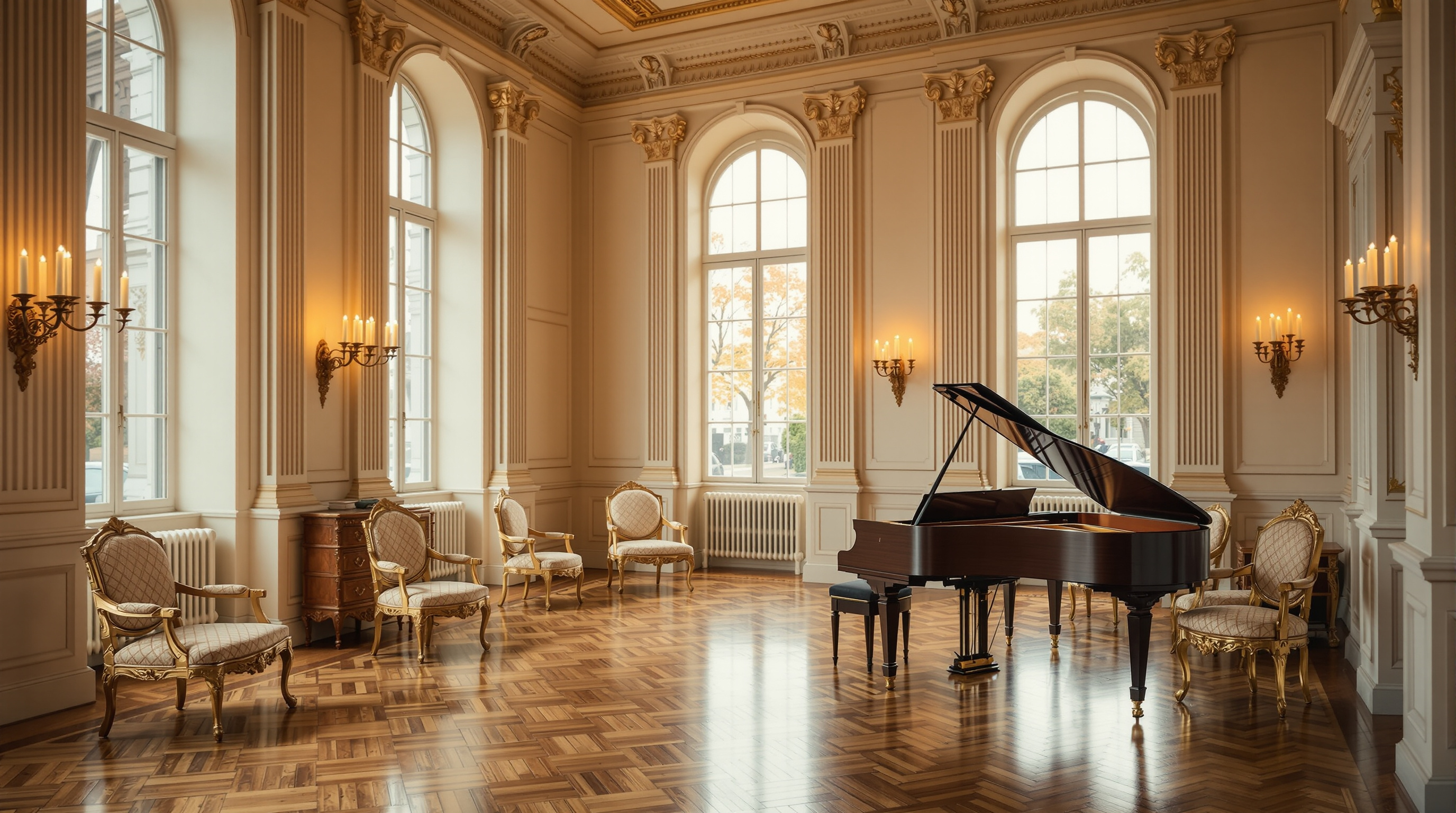
It is worth remembering how this music was first heard. The Classical piano trio lived in the drawing room as much as the concert hall — it was music that cultivated households played themselves, around their own instrument, for their own pleasure. That domestic intimacy never entirely left the genre, and it is part of why the piano trio still feels like a conversation among friends rather than a public oration. The balance of the three voices that later composers refined was, in Haydn's hands, still being discovered.
The late London trios
Haydn's finest works in the form come late. The trios he wrote in and around his celebrated visits to London in the 1790s — the group numbered Hob. XV:27 to 29, and the famous G major with the "Gypsy Rondo," Hob. XV:25 — show a composer at the height of his powers, writing for the excellent pianos and players of the English capital. In them the keyboard part grows brilliant and the strings genuinely characterful. These are the pieces that carried the piano trio across the threshold from cultivated pastime to concert art, ready for the century of masterpieces to come.
What Haydn handed on
By the time Haydn died in 1809, the piano trio had a repertoire, a shape and a future. Everything that follows in this companion — the weight of Beethoven, the song of Schubert, the fire of the Romantics — rests on the foundation he laid. To understand any later trio, it helps to know the room it grew up in.