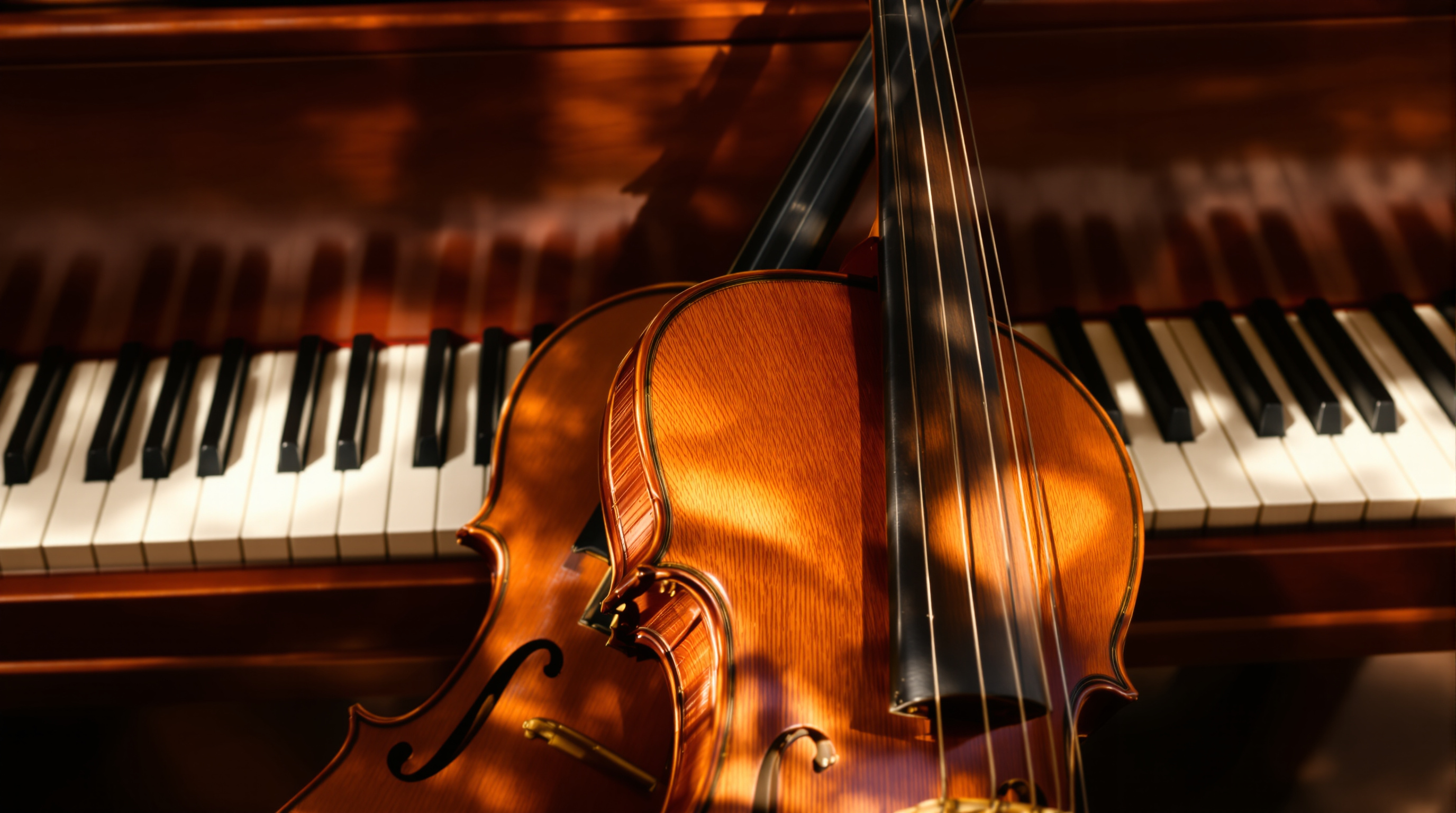
What Is a Piano Trio?
The term describes both an ensemble and a form: three players — piano, violin and cello — and the body of music written for that particular meeting of voices.
In everyday concert usage a piano trio is a group of three musicians playing piano, violin and cello. The same words also name the music they play: a "piano trio" is a multi-movement composition, usually in the shape of a sonata cycle, written for those three instruments. When a programme lists "Mendelssohn: Piano Trio in D minor," it means a specific work; when it lists "the Beaux Arts Trio," it means the players. The double meaning is worth keeping straight, because the genre's whole character comes from the relationship between the two.
Why these three instruments
The combination is not obvious. A piano is a percussion-and-string machine capable of playing complete harmony by itself; a violin and a cello are singing, sustaining instruments that bend and shade a single line. Putting them together creates a built-in tension. The piano can, if the composer is careless, simply swamp the two strings. The art of writing a great piano trio lies in balancing that force — letting the keyboard supply harmony and momentum while the violin and cello carry melody, and then trading those roles constantly so that no one instrument dominates. When it works, the ensemble sounds larger than three people have any right to sound.
The shape of a trio
Most piano trios from the Classical and Romantic periods follow the four-movement plan of the symphony and the string quartet, or a compact three-movement version of it:
- A large opening movement in sonata form, stating and developing contrasting themes.
- A lyrical slow movement — often the emotional heart of the work.
- A dancing scherzo or minuet (sometimes omitted in three-movement designs).
- A finale, frequently a rondo, that sends the audience out smiling.
Within that frame the possibilities are enormous, and the best composers bent the mould freely — Schubert's slow movements swell to symphonic length, Ravel replaced the scherzo with a movement built on a Malay verse form, and Shostakovich made his finale a dance of the dead.
A conversation among equals
What draws players back to the piano trio is its intimacy. There is nowhere to hide: three musicians must agree, phrase by phrase, on tempo, colour and feeling, without a conductor to arbitrate. Audiences sense this. Watching a fine trio is watching a live negotiation, three strong musical personalities finding a single interpretation in real time. Organisations such as the Kennedy Center and countless chamber-music societies build their seasons around exactly that appeal, and the public-domain scores that document the repertoire are studied by students everywhere.
The problem of the cello
The subtlest challenge in writing for the ensemble is the cello. Its natural range overlaps the piano's left hand, so an unimaginative composer can leave it merely doubling the bass — exactly the fate it suffered in the earliest accompanied keyboard sonatas. The history of the genre is, in part, the history of the cello's emancipation: the gradual granting to it of real melodies, singing counter-lines and solos of its own. When you hear a cello open a movement with the principal theme — as it does at the very start of Mendelssohn's D minor trio — you are hearing the problem solved.
The rest of this companion
With the ensemble understood, the historical pages can do their work. The genre begins with Haydn's invention of a real conversation among the three instruments, reaches an early summit in the trios of Mendelssohn and Beethoven, and continues to this day. To hear how the three voices actually behave inside a movement, turn to the listening guide.